Free Zones
IFZA Company Setup
IFZA (International Free Zone Authority) is a Dubai free zone known for a broad activity list and a largely remote setup process. It is a frequent choice for consultants, agencies and online businesses that trade internationally.
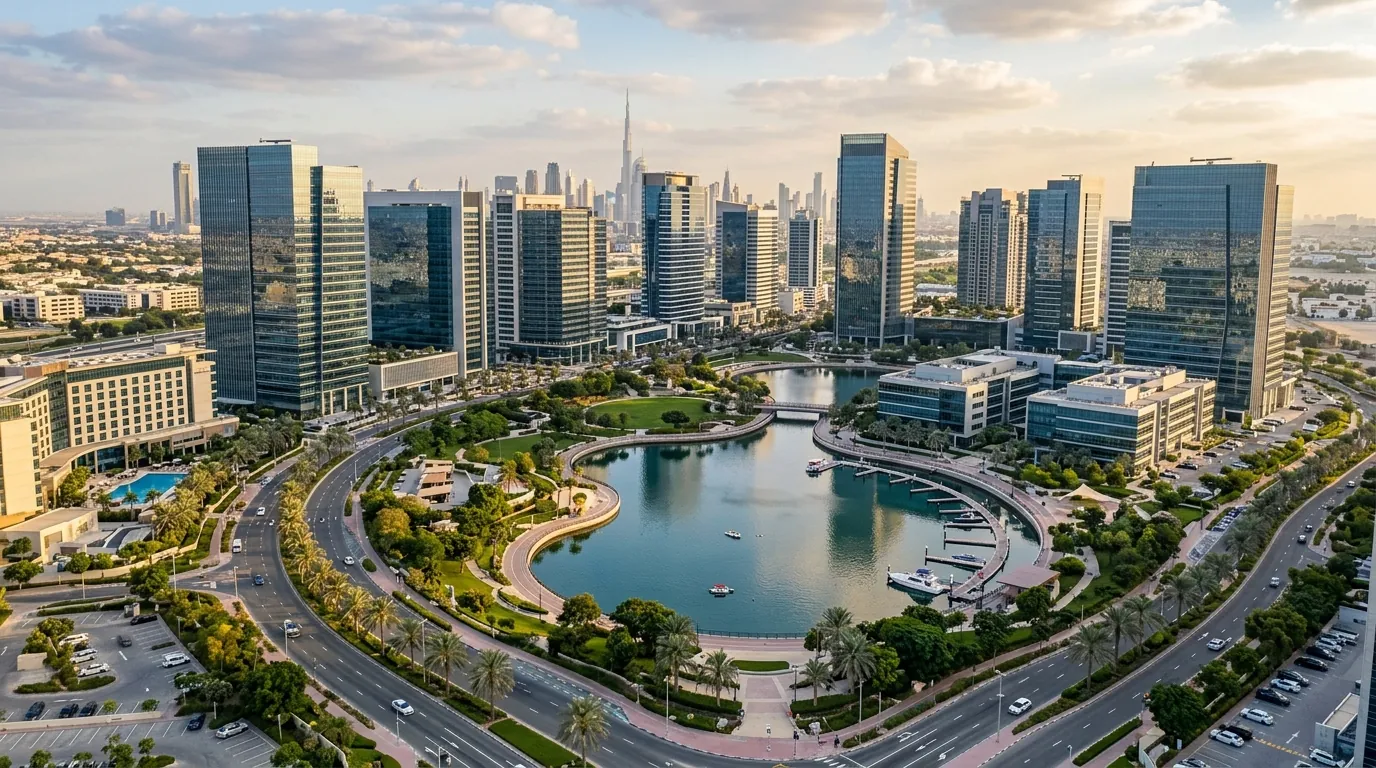
A practical fit
Who this is for
- Consultants, coaches and professional-service founders billing international clients
- Marketing, design and digital agencies
- E-commerce and general trading businesses that do not need a warehouse inside the zone
- Founders who want a Dubai address and a mostly remote setup
End-to-end support
What we handle for you
- Checking your activities against the current IFZA activity list
- Workspace and visa-quota planning before you commit
- Name reservation, application forms and document review
- Licence, establishment card and immigration file coordination
- Investor visa, medical, biometrics and Emirates ID sequence
- Corporate bank account preparation and introductions
The process
A clear step-by-step timeline
Free consultation
You
Explain your activity, clients, team plans and timing.
Founder Solutions
Test whether IFZA genuinely fits, and compare it with realistic alternatives.
Written roadmap
You
Review the roadmap and confirm activities and shareholders.
Founder Solutions
Set out activities, workspace, visa plan, documents and sequence in writing.
Application
You
Provide documents and sign forms, often electronically.
Founder Solutions
Prepare and submit the IFZA application and handle questions.
Licence and visas
You
Attend medical and biometrics when in the UAE.
Founder Solutions
Coordinate establishment card, entry permit, residence visa and Emirates ID.
Banking and settling in
You
Meet banks where required and answer compliance questions.
Founder Solutions
Prepare the bank file, introduce suitable banks and follow up.
Documents you’ll typically need
- — Passport copy for every shareholder and manager (with sufficient validity)
- — Passport-style photograph to the authority’s specification
- — Proof of residential address (recent utility bill or bank statement)
- — Short business plan or activity description
- — CV or professional background where the authority asks
- — UAE entry stamp or visa page if you are already in the UAE
- — Corporate documents, apostilled and attested, if a company is the shareholder
Common mistakes we help you avoid
- — Choosing a zone by name before checking your exact activity wording
- — Picking the smallest workspace and discovering the visa quota is too low
- — Assuming a free zone licence lets you sell directly to mainland customers
- — Forgetting that residence steps require time in the UAE
- — Opening a bank application with an unclear business story
IFZA pros and cons
| Advantages | Trade-offs |
|---|---|
| Broad activity list that can be combined on one licence | Not designed for warehousing or industrial activity |
| Largely remote incorporation process | Selling directly to mainland consumers needs a suitable route |
| Widely recognised by banks and service providers | Visa quota is tied to workspace, so under-planning causes later amendments |
| Dubai address with flexible workspace choices | — |
IFZA at a glance
IFZA is based at Dubai Digital Park within Dubai Silicon Oasis and has become one of the most commonly used Dubai free zones for owner-managed service businesses. Its appeal is practical: a wide range of professional, commercial and some e-commerce activities can be combined on one licence, and most of the incorporation file can be prepared and submitted without the founder being in the UAE.
Because it is widely used, banks and service providers generally recognise IFZA licences. That familiarity does not replace substance—a bank still wants to understand what you do, who pays you and why the company is in the UAE—but it removes one layer of explanation compared with a lesser-known authority.
Who it doesn’t suit
IFZA is not the right answer for everyone. It is usually a weaker fit for: businesses that need a warehouse, workshop or industrial licence; regulated financial services that fall under a financial regulator; companies whose main customers are uae mainland consumers and who need to sell to them directly without an additional permit or route. If one of these describes you, we will say so and suggest a better-fitting authority or a mainland route instead.
Typical activities
Activities commonly licensed through IFZA include management and business consultancy, marketing, advertising and digital services, it services and software consultancy, general trading and specific trading activities, e-commerce activities, subject to activity rules, education and training services (where approvals allow). Activity lists and approval conditions change, and the exact wording on your licence matters for banking, contracts and visas—so we confirm the current list before you apply.
Office and visa options
IFZA packages are typically structured around flexi-desk or shared workspace, with dedicated office space available for companies that need it. The workspace you choose generally influences how many residence visas the company can support, so we check the visa quota before you commit rather than after.
Owners can usually apply for an investor or partner residence visa through the company once the licence and establishment card are issued. Employee visas follow the same immigration sequence of entry permit, change of status where applicable, medical test, biometrics and Emirates ID. Confirm with us – rules update frequently.
Tax context
A free zone company is not automatically tax-free. UAE corporate tax currently applies at 0% on taxable income up to AED 375,000 and 9% above that. A qualifying free zone person may benefit from 0% on qualifying income only if every condition is met. Registration and filing are still required. Take advice from a qualified tax adviser on your facts.
How to prepare a decision-ready brief
Begin with the commercial facts, not a preferred product name. Write down what the business or application must achieve, who is involved, where activity takes place and what must be possible during the first year. For ifza company setup, that means testing the plan against the stated eligibility or licence scope before submitting anything. A clear brief lets us identify assumptions, authority questions and dependencies while they are still easy to change.
Include the less convenient facts as well as the obvious ones: consultants, coaches and professional-service founders billing international clients; marketing, design and digital agencies; e-commerce and general trading businesses that do not need a warehouse inside the zone. Note current UAE status, planned travel, family needs, counterparties and any deadline that cannot move. We then separate confirmed requirements from points requiring authority confirmation. That distinction matters because a plausible application can still fail when one supporting fact, approval or document format does not match the route selected.
Evidence, consistency and authority checks
Authorities, registries and regulated institutions review the whole file rather than one form in isolation. Names, dates, ownership, activity descriptions, employment history, addresses and financial evidence should agree across the application. Typical preparation includes passport copy for every shareholder and manager (with sufficient validity), passport-style photograph to the authority’s specification, proof of residential address (recent utility bill or bank statement), short business plan or activity description. Where certification, legalisation, translation or attestation is needed, we confirm the accepted chain before originals are sent or appointments are booked.
We also check document age, passport validity, image specifications and whether an electronic copy or original is required. A request for further information is not automatically a refusal, but a rushed or contradictory response can create avoidable concern. Our role is to organise the response, explain what the authority is asking and keep a written record of what was submitted. The authority, bank or regulator remains responsible for every eligibility and approval decision.
Planning the sequence around real life
The practical order matters as much as the individual requirements. The main workstreams are checking your activities against the current ifza activity list, workspace and visa-quota planning before you commit, name reservation, application forms and document review, licence, establishment card and immigration file coordination. Some can run together; others depend on an earlier approval, valid status, physical attendance or an issued identity document. We map those dependencies before the process begins so flights, employment changes, tenancy commitments and family applications are not arranged around an unrealistic date.
Processing times vary by authority, season, nationality, activity and the completeness of the file. We therefore use a working sequence rather than promise a fixed completion date. Keep passports available, avoid unnecessary travel during mandatory stages and respond promptly to genuine information requests. If circumstances change—such as ownership, job title, property status, family composition or intended activity—tell us before the next submission so the roadmap can be checked again.
What to verify before committing
Before paying government fees or signing a connected contract, confirm the exact route, issuing authority, scope, validity, renewal obligations and what the approval does not provide. The comparison above highlights practical distinctions including broad activity list that can be combined on one licence, largely remote incorporation process, widely recognised by banks and service providers. Also identify continuing duties such as record keeping, renewals, notifications, insurance, accounting or maintaining qualifying evidence; approval is the start of compliance, not the end.
Finally, stress-test the plan against common failure points: choosing a zone by name before checking your exact activity wording; picking the smallest workspace and discovering the visa quota is too low; assuming a free zone licence lets you sell directly to mainland customers. If one of these applies, it is usually better to pause and correct the structure than to rely on a later amendment. Our written roadmap records the chosen route, client actions, our actions and matters reserved for a regulated legal or tax adviser, giving everyone one consistent basis for the application. Keep that roadmap with issued documents and update it whenever the authority, ownership, activity, residence position or family plan changes.
Questions answered
Frequently asked questions
Can I set up an IFZA company without visiting Dubai?
In most cases the licence stage can be completed remotely. Residence visa steps such as the medical test and biometrics normally require you to be in the UAE, and some banks ask to meet you. We plan those trips so you travel once where possible.
Is IFZA good for e-commerce?
It is often suitable for e-commerce businesses selling internationally or through online marketplaces. The exact activity wording matters, especially if you hold stock, sell to UAE consumers or use third-party logistics, so we confirm the activity before you apply.
Can I combine consultancy and trading on one IFZA licence?
Combining activities is usually possible within the authority’s rules on activity groups. Some combinations need additional approvals. We check your intended activities against the current list first.
Will banks accept an IFZA company?
IFZA companies are widely banked, but approval depends on your business model, source of funds, residence status and documents—not on the free zone name. We prepare the file and introduce suitable banks; we cannot guarantee approval.
How long does IFZA company setup take?
Timing depends on activity approvals, document readiness and the authority’s workload. Your written roadmap sets out the likely sequence; we do not promise fixed dates.
Can I operate on the Dubai mainland with a free zone company?
Free zone companies generally trade within their zone and internationally. Mainland activity usually needs a distributor, a branch or an appropriate permit; Dubai has introduced routes for some free zone companies to operate on the mainland. We confirm the current position for your case.
Official sources
Last reviewed: September 2026
Rules change often – we confirm every requirement with the relevant authority before you apply.
Related guidance